
Traveling to Bhutan by road is a wonderful way to experience the Kingdom’s landscapes, culture, and hospitality right from the border. The most popular route is via the Phuentsholing–Jaigaon border, with other official crossings further east.
Phuentsholing – The Main Land Gateway
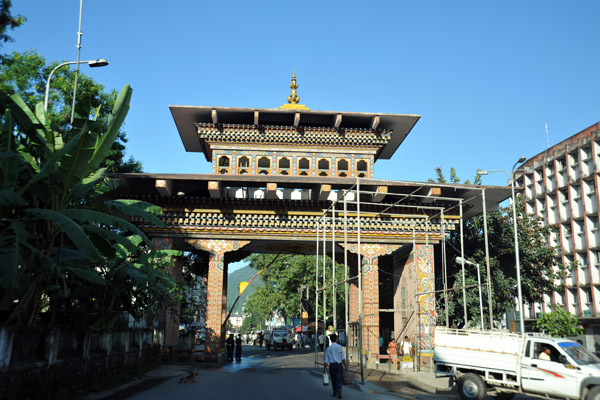
Phuentsholing (also spelled Phuntsholing) is the most common land entry point into Bhutan. Nestled at the foothills of the Himalayas, it borders the Indian town of Jaigaon (West Bengal) and serves as the gateway for road travelers.
What to Expect
- Bhutan Gate marks the transition between India and Bhutan with traditional Bhutanese architecture — a symbolic start to your journey.
- Cross by road as a pedestrian or vehicle; show your passport/ID and complete immigration formalities.
- From Phuentsholing, you can take a private car, taxi, or tourist coach deeper into Bhutan — typically a scenic 4–5 hour drive to Thimphu along well-maintained highways.
- Tour permits and Sustainable Development Fee (SDF) arrangements are often facilitated here for international visitors traveling beyond the border zone.
Other Road Entry/Exit Points
Apart from Phuentsholing, Bhutan has additional authorized roadway crossings, offering access from different parts of India:
- Samdrup Jongkhar – Eastern border access for road travel (seasonal and specific permit requirements apply).
- Gelephu – Central Bhutan entry point (connects to southern India routes).
These routes can be used for customized itineraries or regional explorations, but Phuentsholing remains the primary road gateway for most tourists.
Why Choose Road Travel?
- Scenic journey: Passing through lush foothills and changing landscapes as you ascend toward Bhutan’s cultural heartlands.
- Flexible route options: Combine with rail or air arrival in India for seamless overland adventure.
- Culture from the start: Enter in the south and gradually immerse into Bhutanese life, traditions, and environments.